Apply
Participants, collaborators and venues submit purpose-specific forms and required information.
Initializing portfolio
Roy.
Product · systems · impact
Case study · Jan–Jul 2025
I helped lead and build a full-stack platform that replaced fragmented event-management work with connected registration and role-protected administration flows.
Overview
Patrones Hermosos needed one system for managing venue applications, participant and collaborator registration, groups, administrative roles and the operational information required to run the program.
The delivered platform connects public application forms with protected dashboards, a relational event model and supporting workflows for review, analytics, communication, documents and exports.
Core challenge
The product challenge was broad: many user roles and operational records had to remain connected while each administrator saw only the actions and information relevant to their scope.
Team coordination was equally important. With four people working around conflicting schedules, synchronous sessions were difficult. I adapted planning toward a more flexible hybrid workflow and used focused client meetings to keep delivery moving.
Role
I served as Product Manager and Full-Stack Developer in a four-person team. My responsibilities crossed product planning, interface design, application architecture, data modeling, implementation, security, testing and documentation.
The release-ready platform was a shared team result. This case study attributes product management, architecture, database, interface, JWT, role and testing work to my personal contribution.
Architecture
Public registration and role-specific dashboards built from reusable React components.
Validated REST workflows for accounts, applications, venues, groups and documents.
JWT-backed sessions and role checks protect administrative operations and data scope.
Prisma and MySQL connect venues, people, groups, requests and operational records.
Workflow
The platform turns a public submission into a controlled record that authorized staff can review, assign and use throughout the program.
Participants, collaborators and venues submit purpose-specific forms and required information.
Authorized users evaluate pending records and update their operational status.
Approved people are connected with venues, roles, groups, schedules and capacity.
Dashboards, notifications, analytics and documents use the same validated records.
Contribution
Decisions
Venues, groups, applicants and roles remain connected in MySQL so the same records can support review, assignment and administration.
JWT authentication establishes identity while explicit role checks separate organization-wide and venue-scoped operations.
Shared form, table, navigation and feedback patterns reduce inconsistency across public and administrative areas.
Evaluation focused on representative flows such as registration and sign-in, alongside keyboard, screen-reader and visual checks.
Deep dive
Team challenge
Conflicting schedules made it difficult for all four contributors to work together synchronously.
Working model
Flexible hybrid collaboration, asynchronous progress and targeted client meetings kept responsibilities moving.
Evaluation
Nine of ten participants completed assigned tasks such as registration and sign-in successfully.
01
Core workflows were reviewed without relying exclusively on pointer interaction.
02
Representative flows were reviewed with assistive reading technology.
03
Interface colors and content readability formed part of the accessibility review.
Outcome
Lessons
Evidence
Application portal
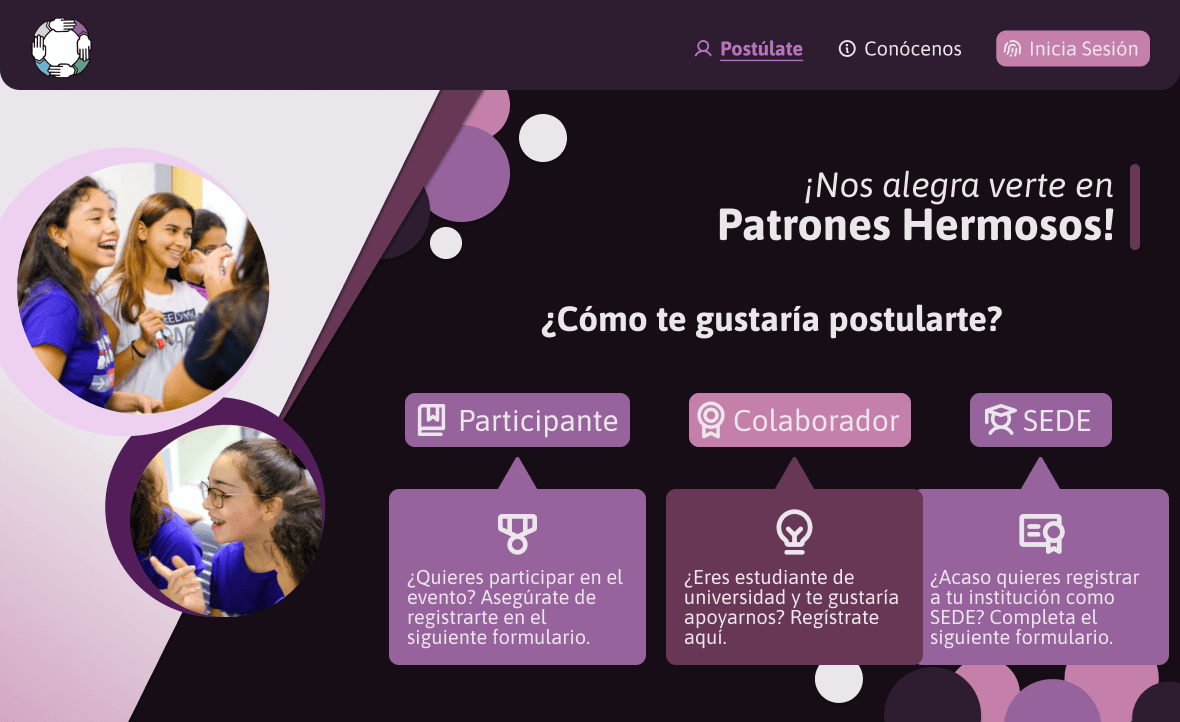
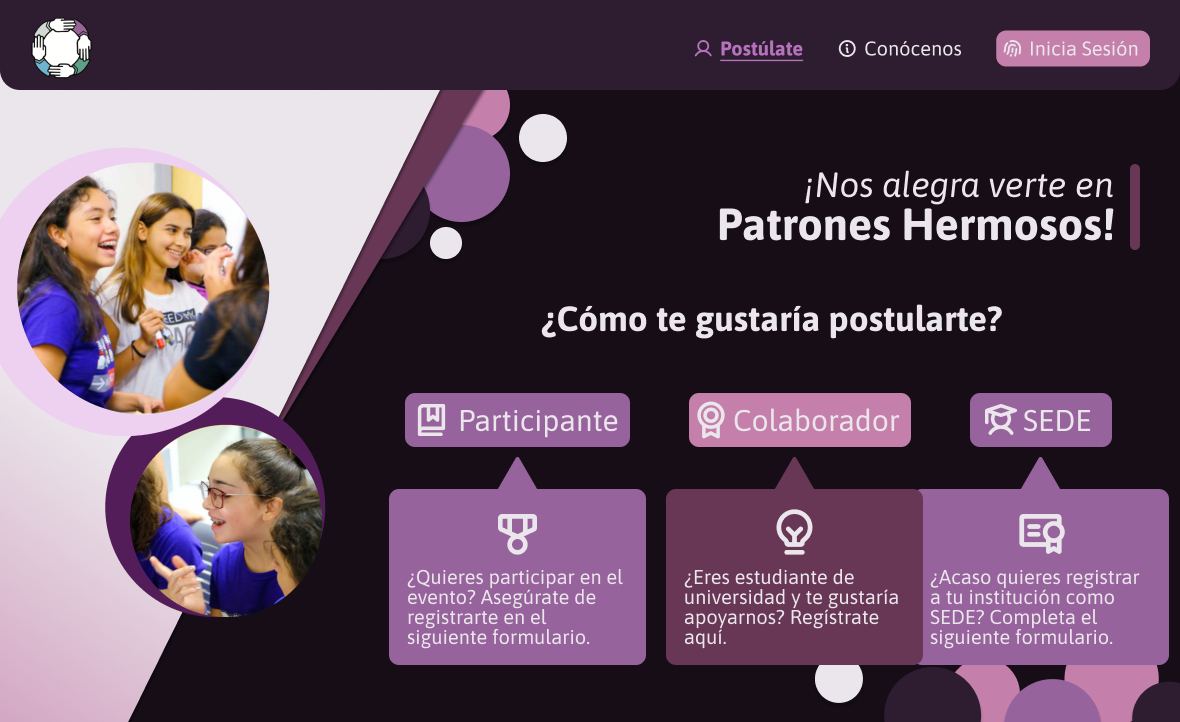
The public entry point separates the program audiences into clear, purpose-specific application flows.
Collaborator registration
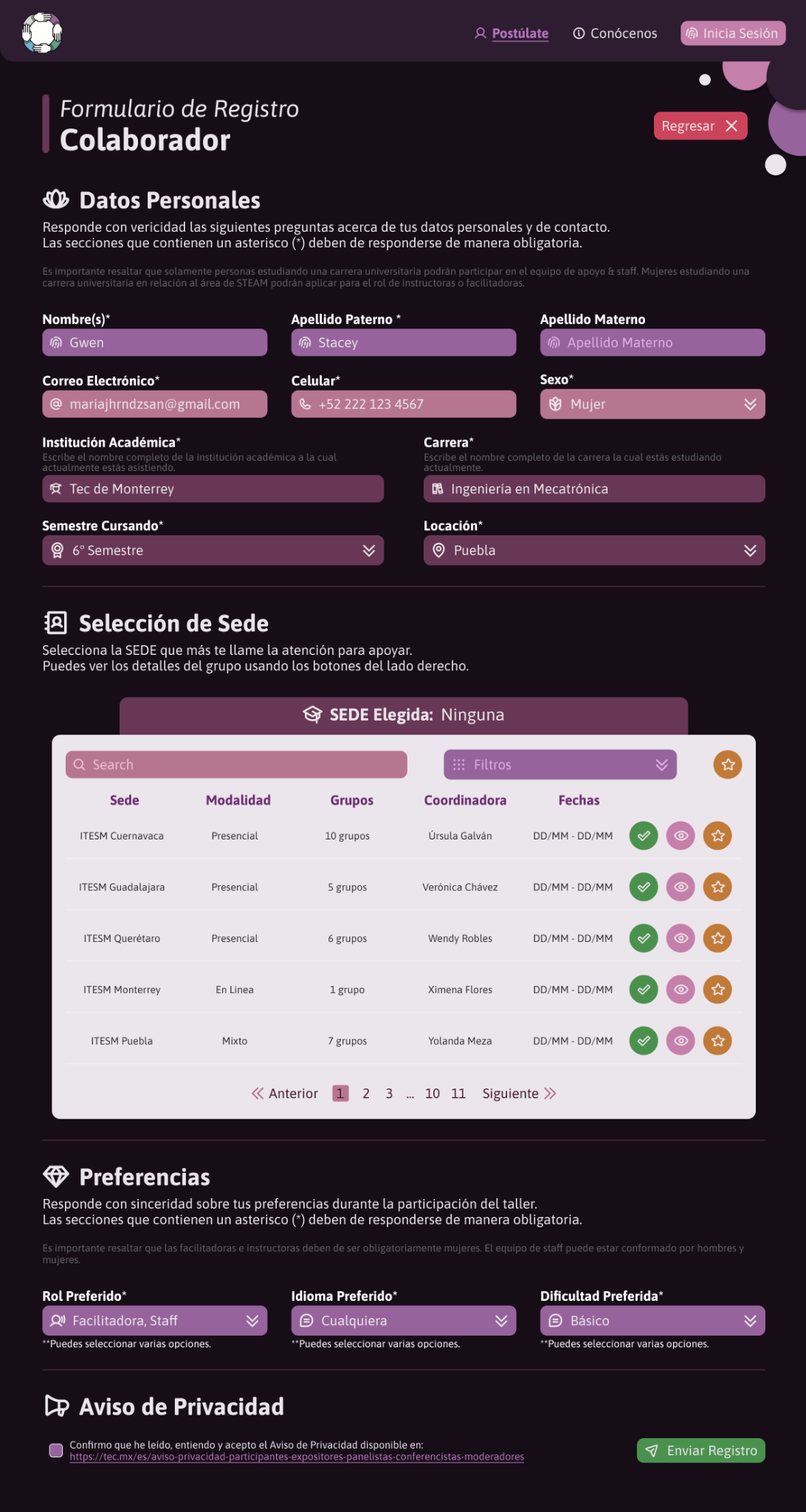
Full resolutionA multi-section flow captures academic profile, preferred role, venue and participation preferences.
Participant registration
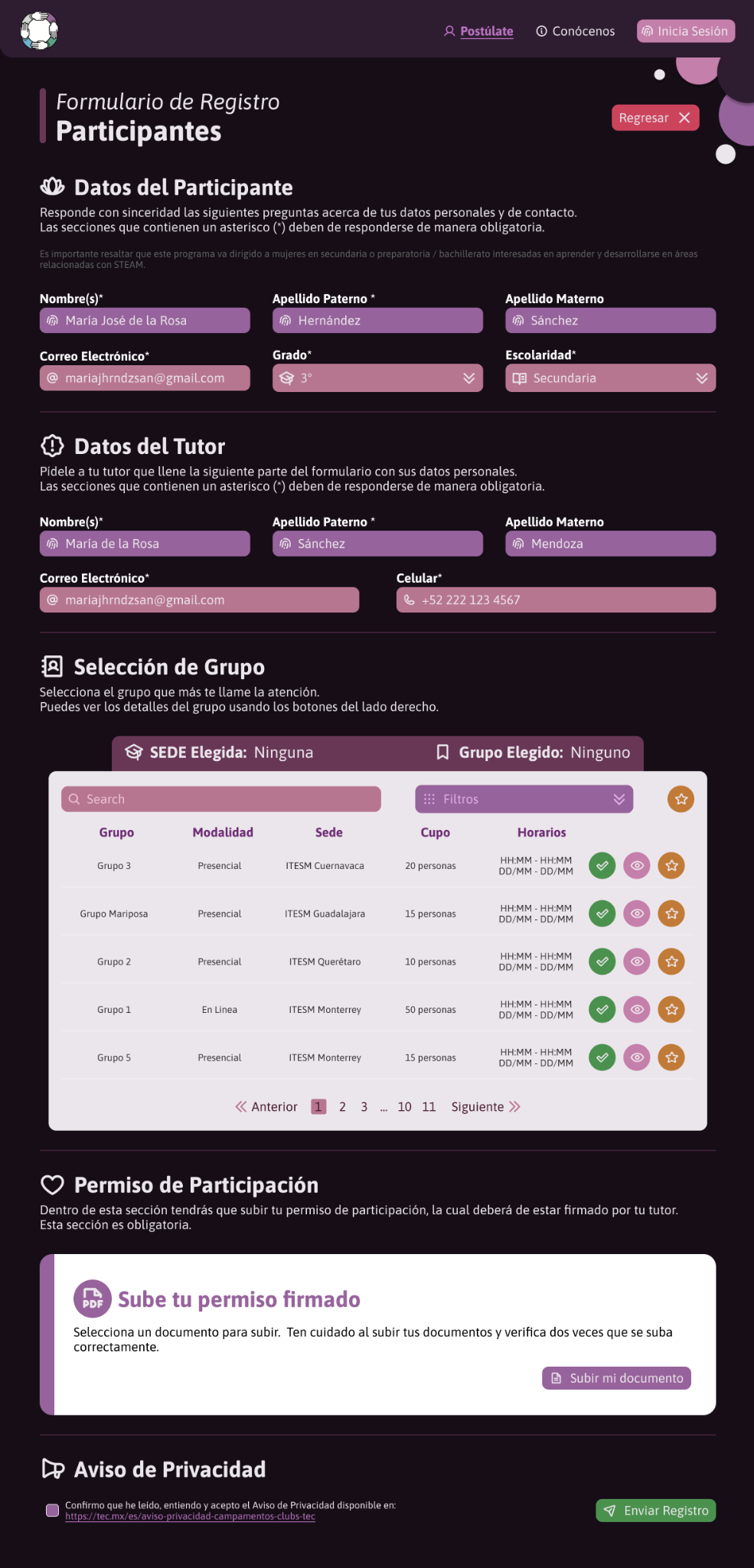
Full resolutionThe participant flow connects student, tutor, group preference, consent and document requirements.
Protected access
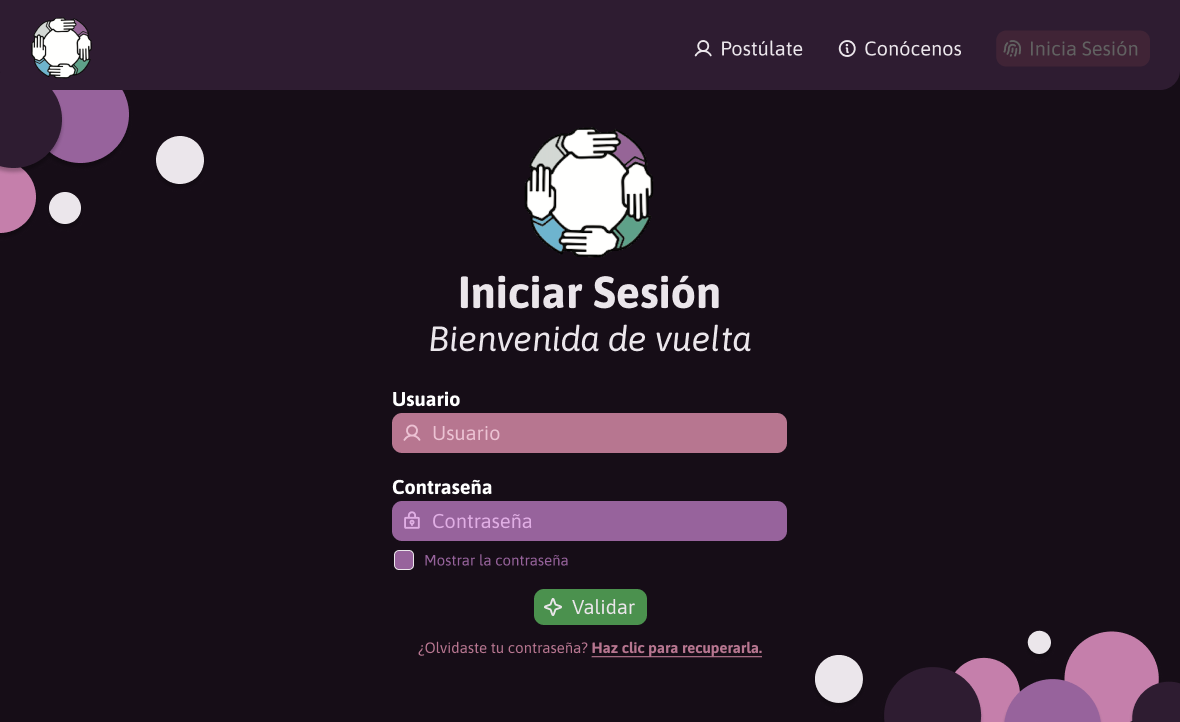
Full resolutionAuthentication establishes the identity used to select the corresponding administrative role and scope.
Venue management
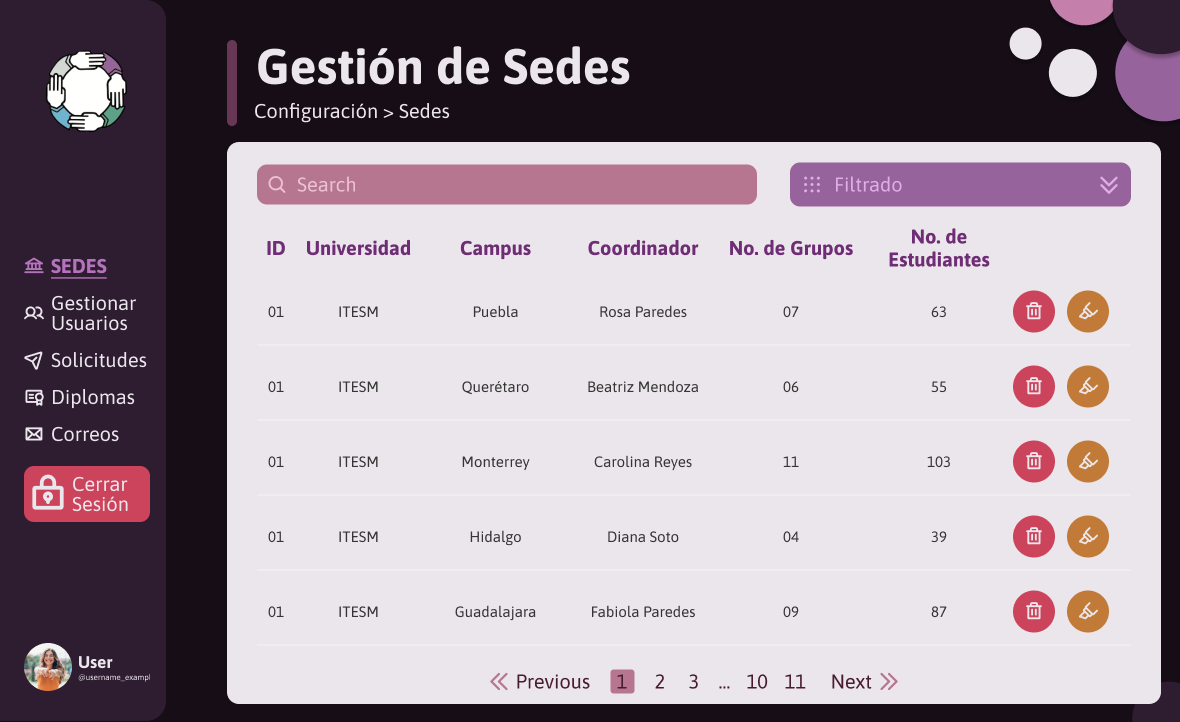
Full resolutionAuthorized users can review program venues and their related group and participant counts.
Role-based administration
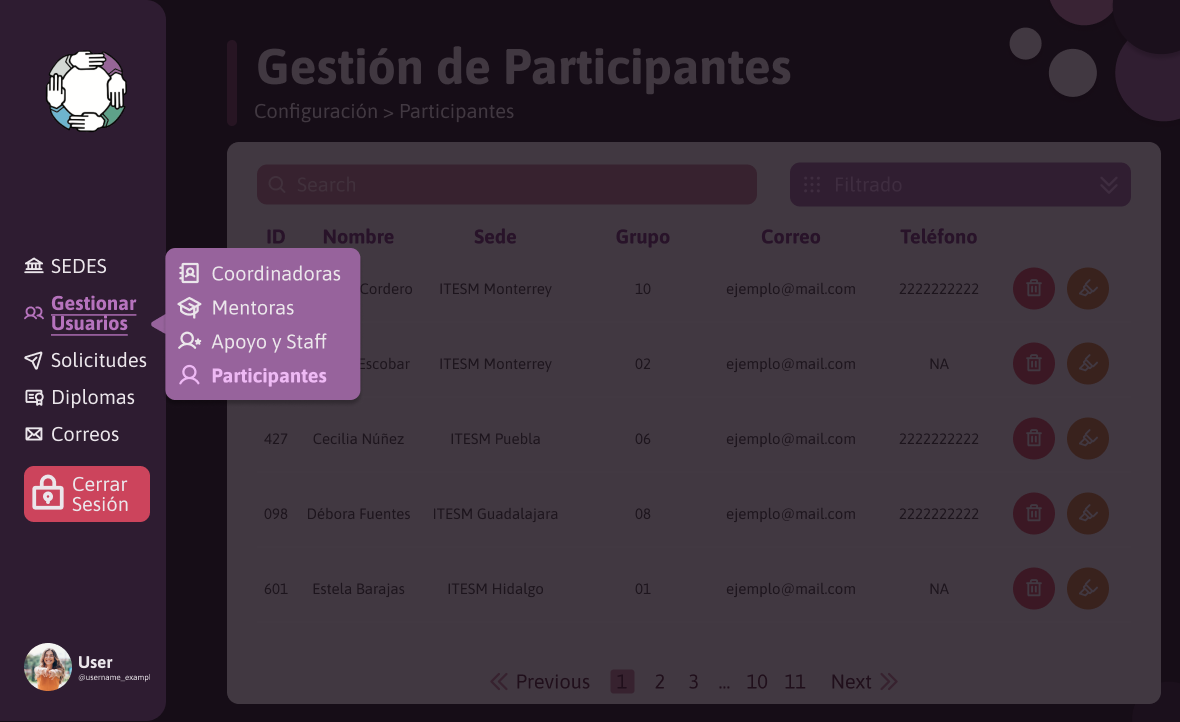
Full resolutionAdministrative navigation groups coordinators, mentors, support staff and participants without exposing every action to every role.
Attribution
Patrones Hermosos was delivered by a four-person team. The screenshots use synthetic demonstration data and are shown with permission. Mockups, client records, source code and private operational assets are excluded.