Choose a category
Start with transport, energy, food or waste and select the relevant activity.
Initializing portfolio
Roy.
Product · systems · impact
Case study · Aug–Dec 2024
I helped lead and build parallel Android and iOS experiences that turn everyday activity into carbon estimates, progress visualizations and sustainability-focused interactions.
Overview
EcoLife was created for EcoEspacio Digital to make sustainability guidance more personal and actionable on mobile devices.
The product combines a category-based carbon calculator, local emission history, daily challenges, sustainable-place discovery and Cleany Roads, an educational recycling game. Android and iOS were implemented as separate native applications following the same product direction.
Core challenge
The team had 10 weeks to move from product definition to two working native applications. Planning, client communication and scope control were essential because every major workflow had to be represented on both platforms.
The technical challenge was keeping habit records, calculations and charts coherent between Android and iOS while still using each platform's native interface and persistence tools.
Role
I worked as Product Manager and Full-Stack Developer in a four-person team. My personal work included product design, local data, habit registration, charting on Android and iOS, the complete EcoLife visual identity and support for the mobile game.
The Android and iOS applications prepared for release were team outcomes. The product, data, habit, visualization, identity and game-support responsibilities above describe my personal scope.
Architecture
Kotlin and Jetpack Compose on Android; Swift and UIKit on iOS.
Transport, energy, food and waste actions provide category-specific values.
Configured emission factors transform recorded activity into educational estimates.
On-device records support totals, charts, challenges, streaks and game progress.
Workflow
The primary product loop connects an activity entered by the user with a stored estimate and feedback that can influence the next habit.
Start with transport, energy, food or waste and select the relevant activity.
Enter quantity or duration and validate the category-specific information.
Apply the configured factor and store the resulting estimate locally in SQLite.
Review category totals and charts, then use recommendations, challenges or the game.
Contribution
Decisions
Android and iOS use their own interface frameworks while sharing product requirements and visual direction.
Habits, estimates, streaks and game state remain available without requiring a cloud account or constant connection.
Transport, energy, food and waste keep their own inputs and factors before results are aggregated for analysis.
Challenges, streaks, recommendations and the game extend the experience beyond a one-time calculator result.
Deep dive
Constraint
The team had 10 weeks to complete the planned mobile product for Android and iOS.
Approach
Frequent client meetings, flexible planning and shared product requirements kept both implementations aligned.
Result
The team prepared both applications for release, although neither was published to an app store.
01
Category inputs, local calculations, history and charts form the central product loop.
02
Recommendations, daily challenges and streaks encourage repeated use and reflection.
03
The mobile game reinforces recycling concepts through collection, obstacles, energy and scoring.
Outcome
External validation
Performance recommendation
March 2026
Myrna Morales Márquez · General Director, Eco Espacio
Eco Espacio confirmed my active participation in the mobile project and highlighted my attention to detail, proactivity, creativity, leadership and ability to apply new knowledge to the delivered prototype.
Read the redacted recommendation letterLessons
Evidence
Carbon-footprint overview
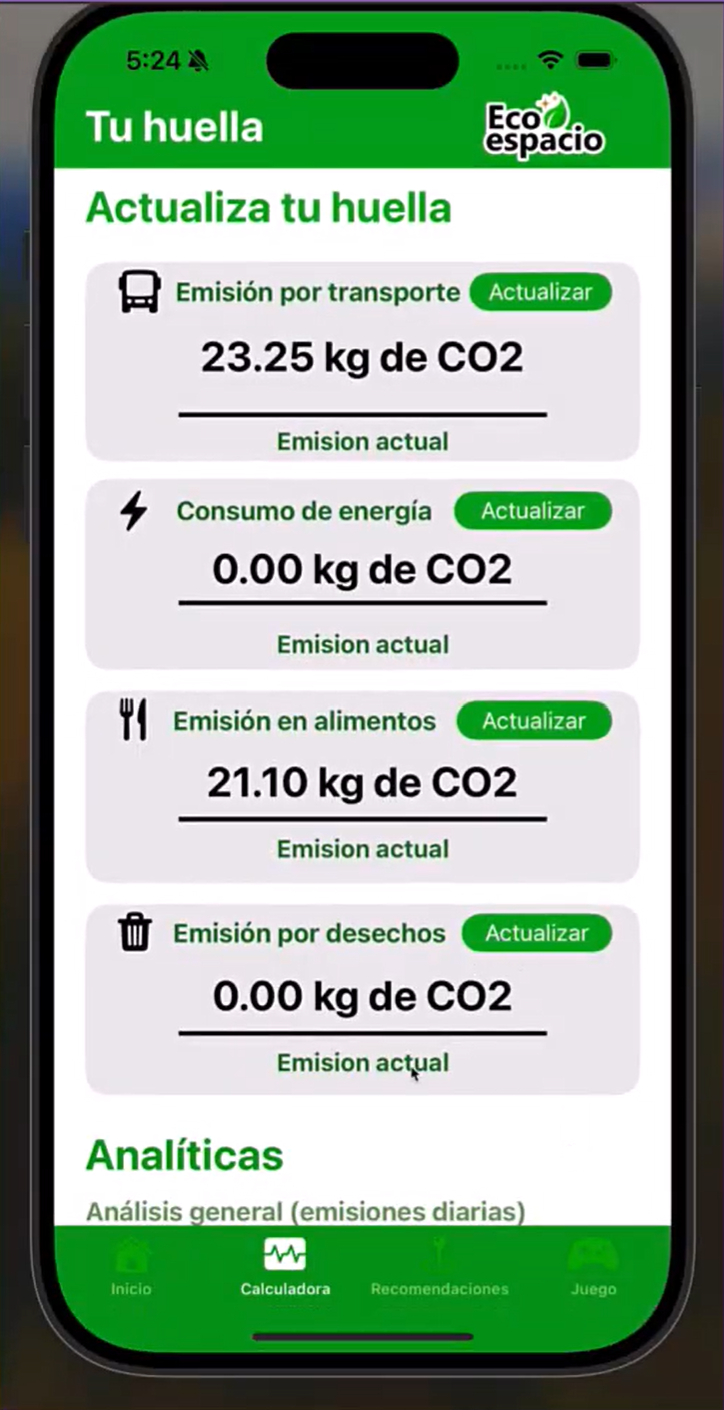
The calculator brings category estimates into one view before presenting their historical analysis.
Activity registration
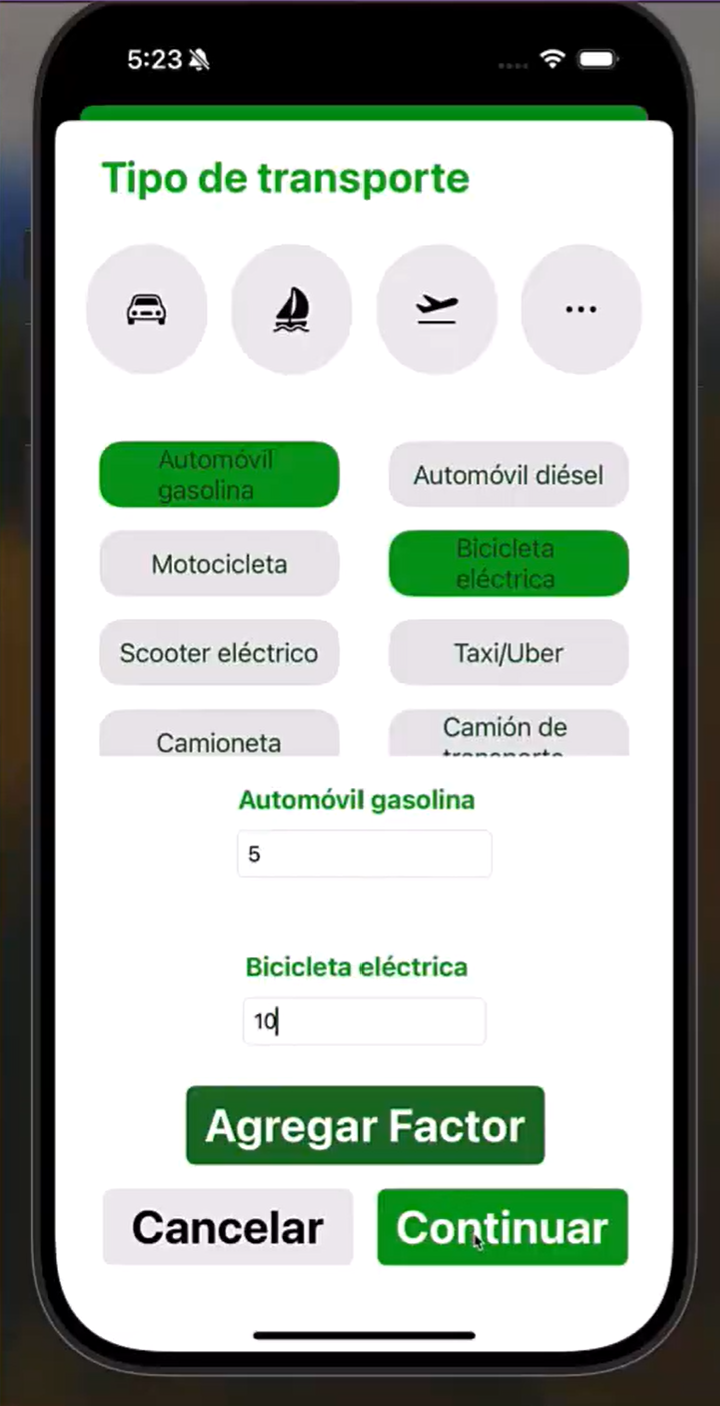
Full resolutionUsers choose one or more transport activities and enter the values required for the estimate.
Emissions analytics
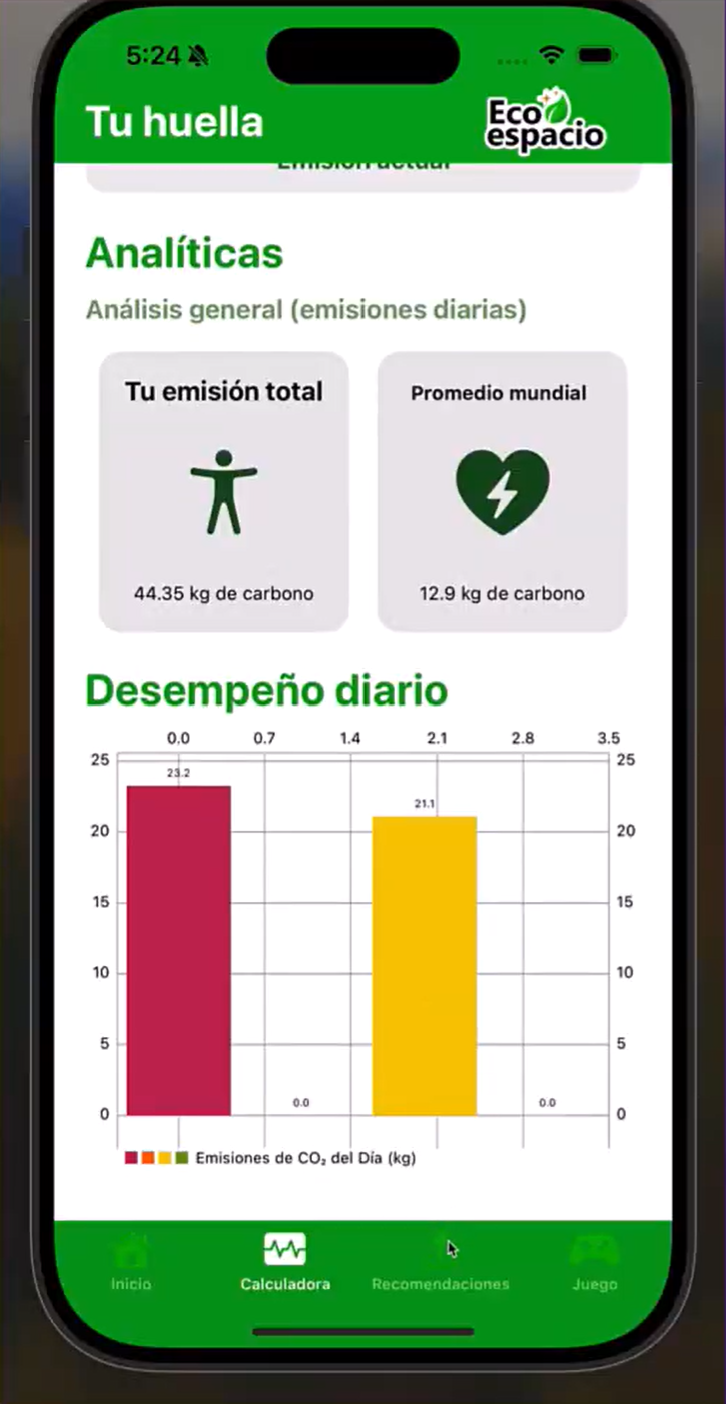
Full resolutionDaily totals and category values are aggregated into an understandable visual summary.
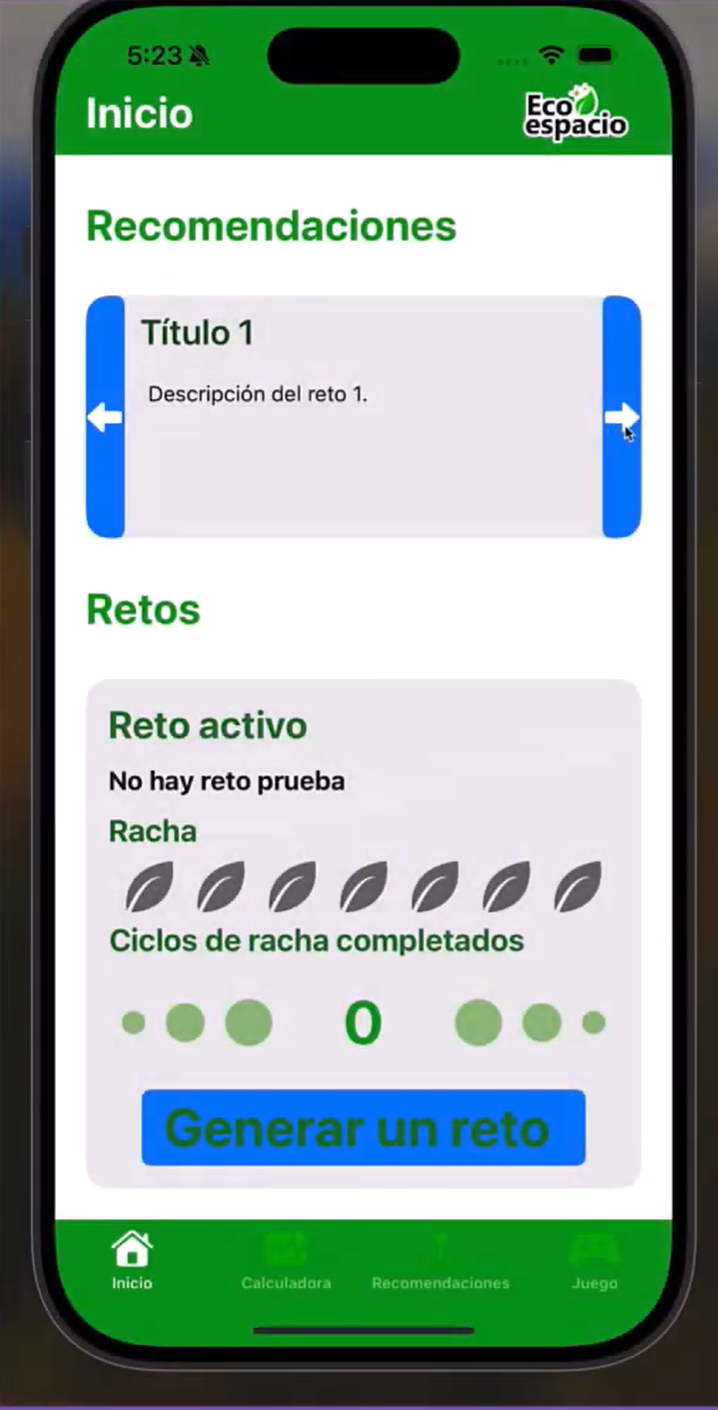
Challenges and streaks
Full resolutionThe home screen turns environmental guidance into a repeatable challenge and progress loop.
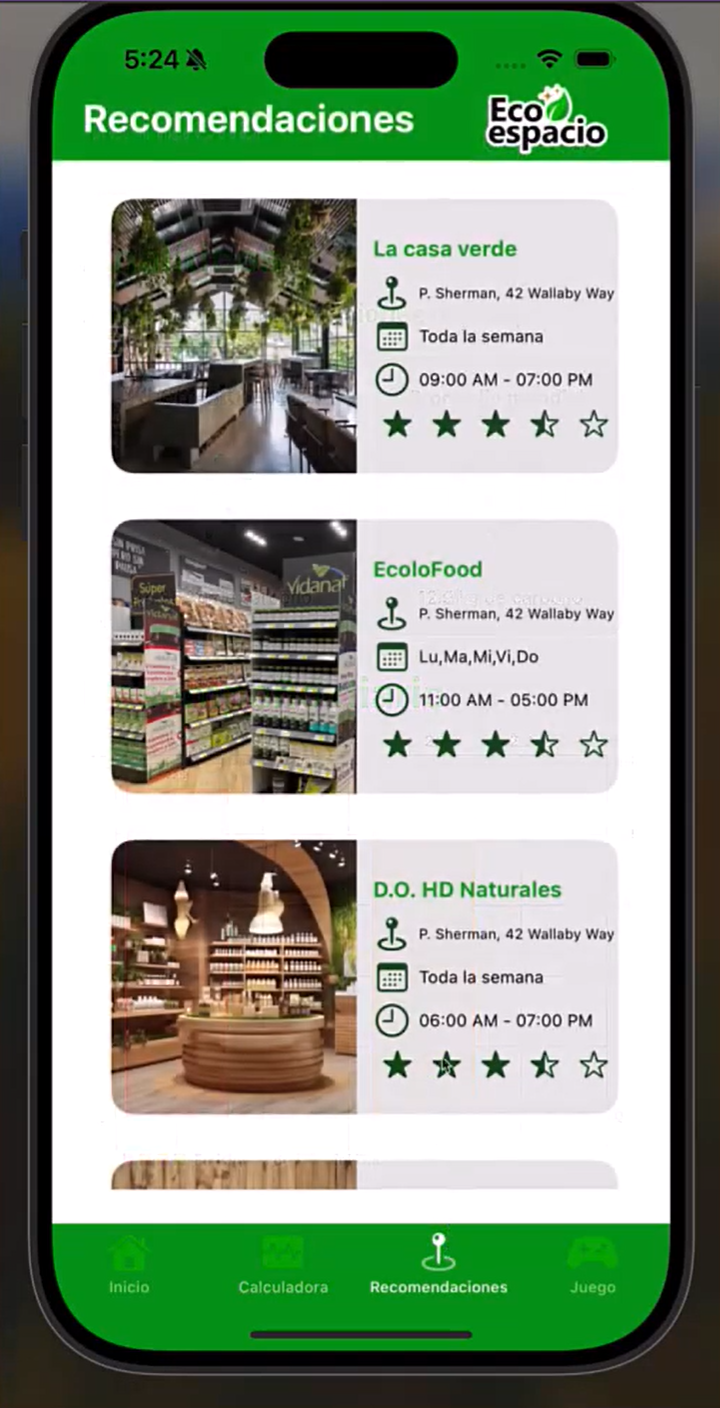
Sustainable places
Full resolutionCurated place cards provide names, reference locations, schedules and visual context.
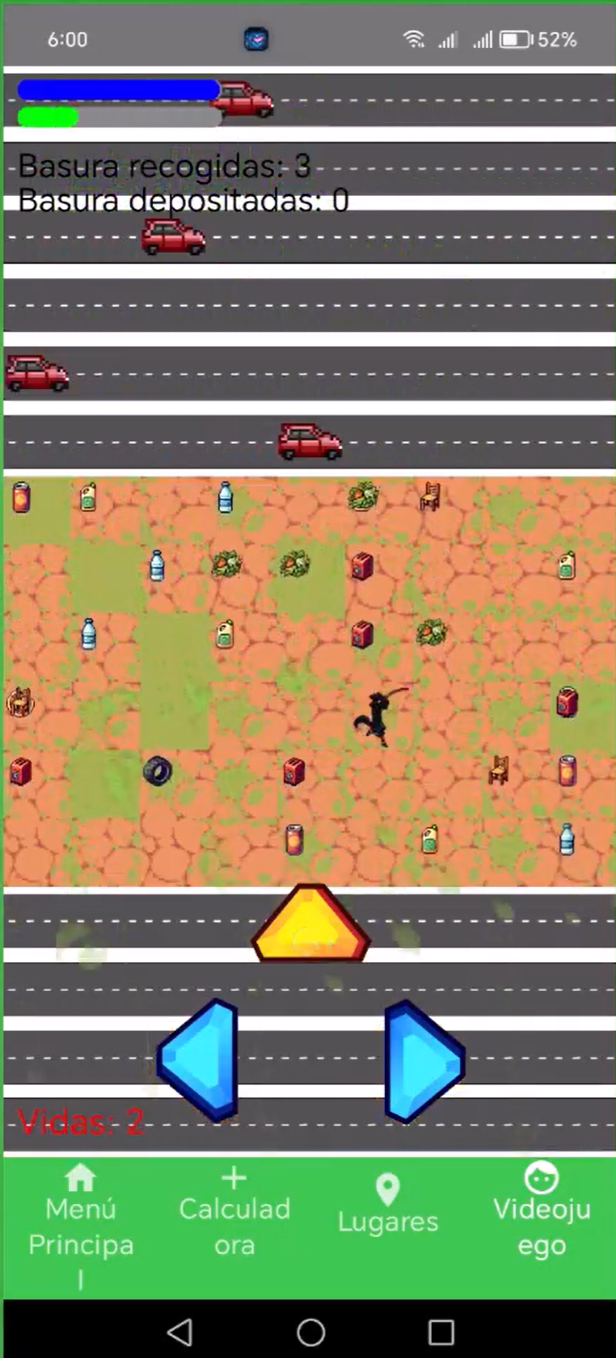
Cleany Roads
Full resolutionThe educational game adds waste collection, obstacles, lives and scoring to the sustainability experience.
Attribution
EcoLife was completed by a four-person team for EcoEspacio Digital. Product imagery is shown with permission. Mockups, source code, private databases, client assets and internal documentation are excluded.